2private schools in Yopougon
350students or so attended the presentations
52students helped to create their account
20students answered our questionnaire
Why we go into schools
We build SukluAcademy for secondary-school students in Côte d'Ivoire. Their working conditions are nothing like an office. The phone is often shared with the family. The connection comes and goes, and mobile data has to be saved. Classes are large. Testing the app among ourselves is not enough. We have to put it in students' hands and watch what happens.
Every session has the same goal. We want to see whether a student discovering the app can, without help, create an account, find the lesson for their level and complete a first exercise. Anything that slows them down or stops them becomes a fix to make.
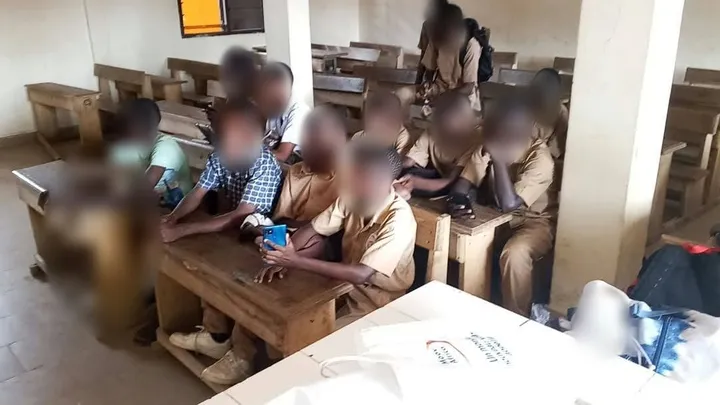
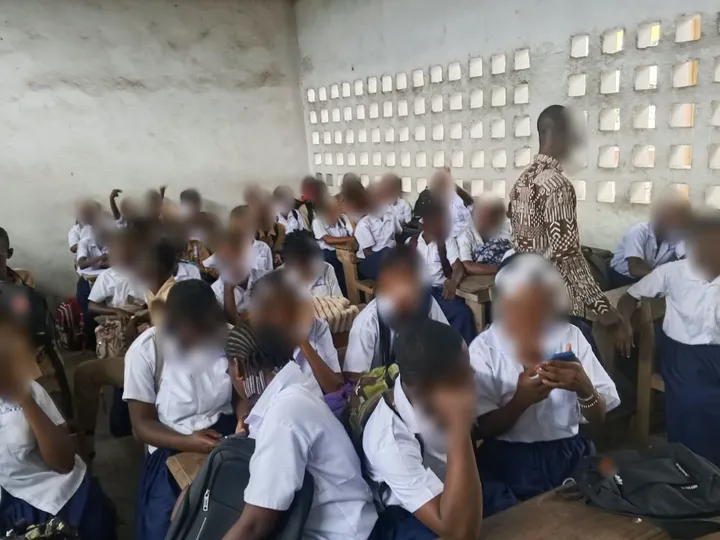
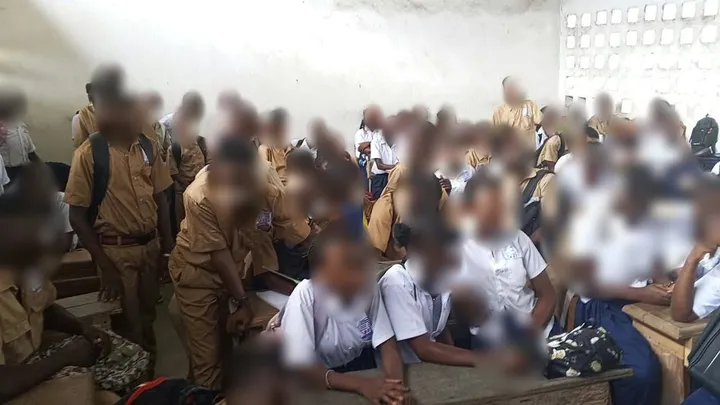
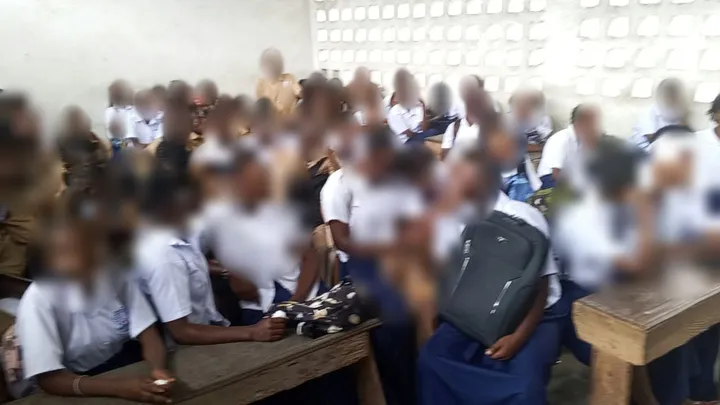
SukluAcademy presented in two private schools in Yopougon, September and October 2026. Photos published with the schools' permission. Faces are blurred.
How it went, step by step
| Date | What we did |
|---|---|
| 22 September 2026 | Presentation of SukluAcademy, with videos, to about 250 students from 6e to 3e (ages 11 to 15) at the first school. Afterwards, 65 lower-secondary students volunteered for the trials. |
| 30 September 2026 | Hands-on session with the 42 volunteers present: each created an account on their phone, with our help when needed. |
| 1 October 2026 | Presentation at the second school, supervised by the school's education officer, to about a hundred students. The ten students who had their phone installed the app and created an account. |
| 7 October 2026 | A further session at each school: 20 lower-secondary students answered our questionnaire. |
How a session runs
- Presentation. In a few minutes we explain what the app is for and how it protects students. Lessons, videos and exercises are free with an account. Conversations are supervised, and the AI tutor is moderated.
- Hands-on time. Students who have a phone use it, often several of them around the same screen. We bring a Wi-Fi hotspot so the session does not depend on students' mobile data. We do not step in straight away: we watch where they hesitate.
- Questions. Students ask their questions out loud. We write all of them down, even the ones that seem simple, because they show what the screen fails to explain.
- Debrief with the teaching staff. We talk with the teachers and education officers present about what would help them in class.
Sessions take place on Wednesdays between 12:00 and 14:00, so they do not cut into lessons, and last an hour and a half. Parents are informed in advance through the parents' association.
What we observed
- A warm welcome. Overall, students liked SukluAcademy, especially the video lessons and the instantly marked exercises.
- The same two questions. "Is it free?" and "Do I need a connection to use it?". We now answer both at the very start of every presentation.
- Creating an account was difficult for several students: it is the step we are simplifying first.
- Few personal phones. Out of 50 students in 6e and 5e, only 10 had a smartphone. The phone often belongs to the parents, is banned at school, and several students told us theirs is confiscated for the whole school year.
- iPhones. Across the two schools, 15 students could not install the app, which was then available on Android only.
- Videos were too heavy to load on a weak connection.
- The AI tutor was in high demand: students quickly reached the day's question limit.
What we are changing
- Lighter videos. Every video now comes in a lighter version suited to slow connections.
- Offline. Students can download their lessons while they have a signal, then follow them without a connection.
- On a computer too. For students without a phone of their own, the app opens in a web browser, on a family or school computer, with the same account.
- iPhone. An iPhone version of the app is in preparation.
- AI tutor. During trials, the question limit is raised.
- Sessions. A Wi-Fi hotspot now comes with every session, and both the free access and offline mode are explained in the first minutes.